Capture six fields before the window opens
- Scope: affected product, version, endpoint, location, business duty, advisory, and exposure.
- State: current health, open transactions, integrations, jobs, alerts, configuration, and last known-good timestamp.
- Evidence: version output, relevant logs, endpoint inventory, screenshots without secrets, and known indicators.
- Recovery: backup, rollback package, offline procedure, decision owner, and maximum tolerable interruption.
- Verification: ordering, payment, receipt, kitchen, reporting, device, and integration tests with expected results.
- Watch: named observer, duration, thresholds, escalation route, and evidence required to close.
Map display endpoints with the POS Digital Display incident handoff. Preserve settlement and refund evidence with the SI Receipt refund-proof window.
Separate containment from correction
If there is credible exposure, isolate the smallest affected boundary first and preserve the observed state. Do not erase logs, rotate every credential indiscriminately, or reboot all locations merely to create visible activity. Record who authorized containment and what customer-facing fallback remains available.
Connect device and replacement ownership through ServingIntel hardware planning.
Use a two-person change handoff
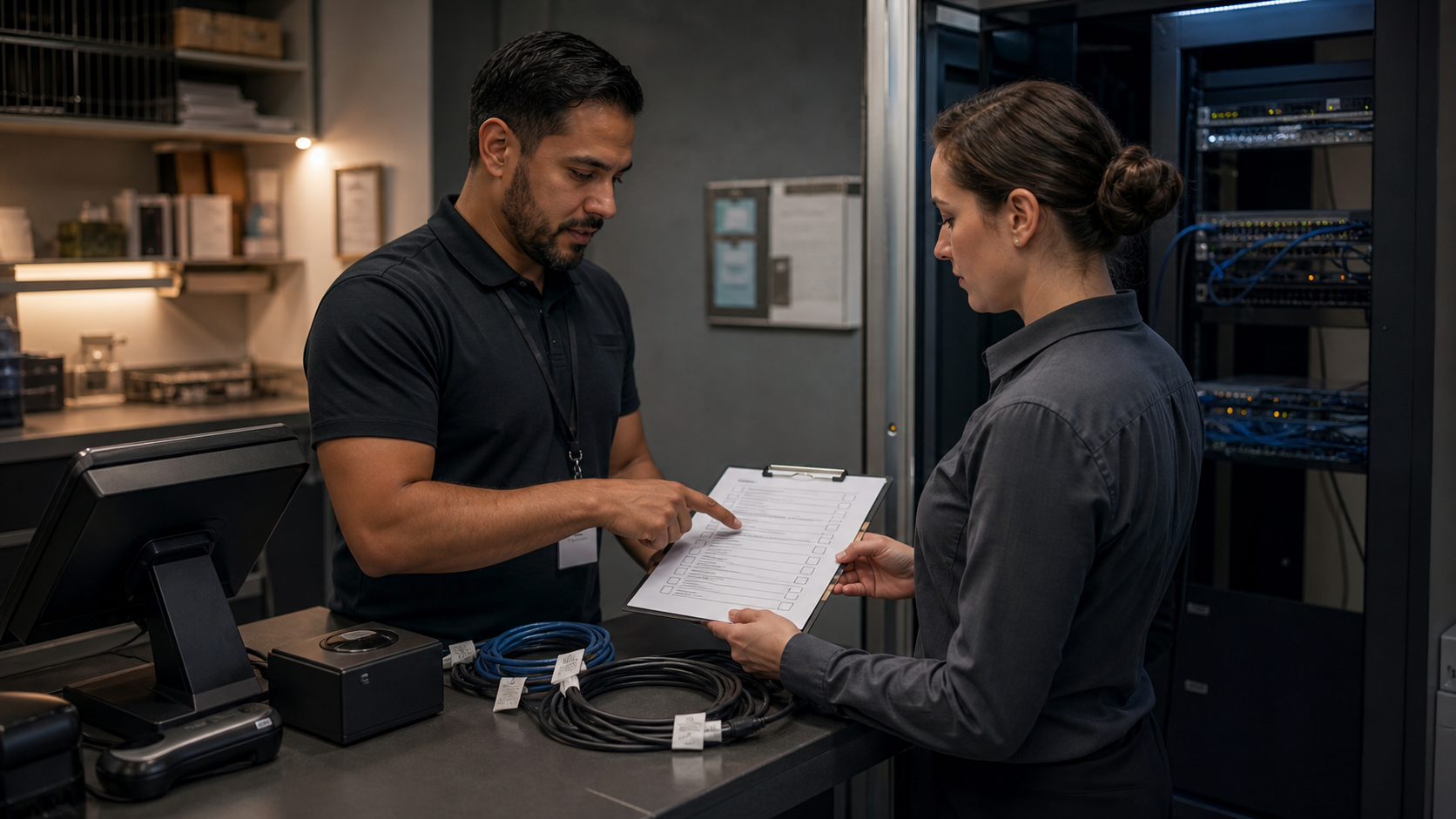
The implementer states the exact target, package, start condition, rollback trigger, and expected service impact. The verifier repeats the plan back, confirms evidence storage, and owns the post-change checks. If the two records disagree, the change pauses before mutation.
Track related operating context through ServingIntel News & Insights.
Verify the business journey, not only the version
- Confirm the patched version and expected configuration are active.
- Run one controlled order from entry through payment, receipt, routing, close, and reporting.
- Check scheduled jobs, remote management, integrations, and device reconnects.
- Compare live outputs with the pre-change control record.
- Watch error, latency, payment, and exception signals for the agreed period.
Keep the final operating evidence connected in ServingIntel Genesis.
Close only with a complete handback
Record the exact package, operator, timestamps, endpoint results, exceptions, rollback status, remaining exposure, next owner, and follow-up date. An update is not complete because the device restarted; it is complete when the intended risk is reduced and the critical operating path is proven.
The bottom line: urgency should shorten the decision path, not erase the evidence path.